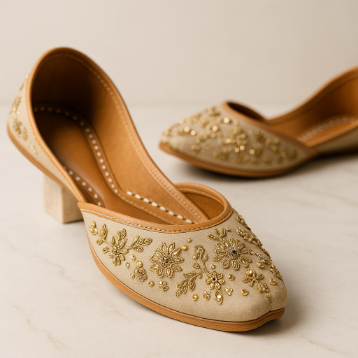
A wedding wardrobe is often remembered for its clothing, but the right footwear quietly determines how polished, comfortable, and complete the entire look feels. That is especially true with punjabi jutti, a style that carries heritage, elegance, and surprising versatility in equal measure. Whether you are dressing as a bride, part of the family, or a guest moving through long hours of ceremonies and celebration, choosing the right pair deserves more thought than a last-minute match to your outfit.
Why Punjabi Jutti Belongs at Weddings
The enduring appeal of punjabi jutti lies in its balance of tradition and practicality. It complements formal Indian wear beautifully, yet it does not feel overly rigid or costume-like. A well-made pair can soften a heavily embellished ensemble, echo intricate embroidery, or add just enough detail to a simpler outfit. Unlike many occasion shoes that look impressive but become difficult after an hour, juttis are often chosen because they can carry a wearer through rituals, greetings, dancing, and long stretches of standing.
For weddings, that matters. The event calendar usually moves across different moods and dress codes, from intimate daytime functions to richly styled evening celebrations. Punjabi jutti works across that range because it can be understated, festive, or bridal depending on its material, shape, and embellishment. Fine threadwork, gota accents, mirror details, pearls, zari, sequins, and classic leather finishes all create different effects without losing the essential character of the shoe.
There is also an emotional quality to this choice. Many people are drawn to footwear that reflects craft rather than mass sameness. A wedding is one of the few occasions where artisanal details feel fully at home, and juttis naturally bring that sense of hand-finished care.
How to Choose Punjabi Jutti for Each Wedding Event
One of the easiest mistakes is buying a single pair without considering the wedding schedule. The best choice depends on when you will wear it, what you will wear with it, and how much movement the event demands.
| Wedding Event | Best Jutti Style | What to Prioritize |
|---|---|---|
| Mehndi or Haldi | Light embroidery, soft colors, flexible sole | Comfort, easy movement, cheerful finish |
| Sangeet | Secure fit, cushioned base, subtle sparkle | Stability for dancing and long wear |
| Wedding Ceremony | Refined embellishment, rich textile, elegant shape | Formality, harmony with the main outfit |
| Reception | Sleek metallics, pearls, or tonal embroidery | Polished evening look without visual heaviness |
For daytime celebrations, lighter tones and softer surfaces tend to work best. Think blush, ivory, muted gold, pastel green, or powder blue depending on the outfit palette. Evening functions can take more depth and richness: antique gold, champagne, maroon, emerald, or black with understated embellishment.
If you are buying for the main wedding ceremony, avoid choosing only by decoration. Heavy ornamentation can look beautiful in photographs, but a wedding pair should also feel balanced on the foot and secure enough for real wear. If you are exploring styles for multiple functions, a curated punjabi jutti collection can make it easier to compare shape, finish, and comfort details before settling on the pair that suits the occasion best.
For brides, the jutti should support the outfit rather than compete with it. If the lehenga or suit is highly embroidered, look for a pair that repeats one or two key elements instead of mirroring every detail. For family members and guests, versatility matters more. A pair in a thoughtful neutral can move across several outfits and still feel special.
Fit, Comfort, and Craftsmanship Matter More Than Ornament
The most beautiful wedding shoe quickly loses its appeal if it pinches, slips, or feels stiff. Punjabi jutti is close-fitting by nature, so the structure and finishing make a real difference. Good craftsmanship usually shows up in the small things: neat lining, smooth inner edges, even stitching, well-shaped toe construction, and a sole that feels grounded rather than flimsy.
Material choice is equally important. Leather-backed or soft-lined options often become more comfortable with wear, while heavily structured styles may need time to ease into the foot. If the pair is richly embroidered, check that the decorative work does not create roughness inside. Comfort at weddings is rarely about softness alone; it comes from fit, flexibility, and how well the shoe holds the foot during movement.
What to check before buying
- Toe room: The front should feel secure, not cramped.
- Heel grip: Your foot should not lift excessively while walking.
- Inner finish: The inside should feel smooth against the skin.
- Sole support: A slightly sturdier sole often performs better for long functions.
- Weight: Excessively heavy embellishment can become tiring over time.
If possible, try the pair at the time of day when your feet feel closest to event conditions, especially if you expect long wear. Walk, turn, and stand in them for several minutes. Weddings involve far more movement than a quick fitting room test suggests.
LeafOpal, positioned in the premium end of the category, is best considered when you want this balance of elegance and wearability rather than a purely decorative purchase. For occasion footwear, that balance is where value often lives.
How to Style Punjabi Jutti with Wedding Outfits
A strong wedding look is rarely built on exact matching. The more refined approach is coordination through texture, finish, and tone. Punjabi jutti should feel connected to the outfit, jewelry, and overall mood, but it does not need to disappear into the same color family.
Bridal and festive styling principles
- Match one visual element, not all of them. If your outfit features antique gold embroidery, echo that in the shoe without duplicating every motif.
- Use metallics intelligently. Champagne, dull gold, and soft silver are often easier to rewear than brighter finishes.
- Respect silhouette. Heavily flared lehengas can support more ornate juttis, while sleek saris or straight suits often benefit from cleaner, narrower styles.
- Consider hemline visibility. If the footwear will barely show, prioritize comfort. If it will be visible while seated, walking, or dancing, detail matters more.
For lehengas, rounded-toe or softly pointed juttis with delicate embroidery usually create a graceful finish. For shararas and ghararas, slightly richer surface detailing works beautifully because the movement of the garment reveals the footwear more often. For saris, especially contemporary drapes, a slimmer silhouette and a more restrained pattern tend to feel elegant. Men wearing sherwanis or kurtas can also benefit from refined juttis in neutral or tonal shades, particularly when the wedding aesthetic leans traditional.
Color choice should follow the role you are playing at the event. Brides and immediate family can carry richer, more distinctive finishes. Guests are often better served by understated sophistication. A beautifully made neutral pair can often look more elevated than a louder option chosen simply to match.
A Smart Buying Checklist Before You Commit
Before making a final decision, step back from embellishment and ask a few practical questions. Wedding footwear should perform in real life, not just in a box or under boutique lighting.
- Will this pair still feel comfortable after several hours of standing and walking?
- Does the color work with more than one outfit if needed?
- Is the craftsmanship clean enough for close-up visibility?
- Will the design age well in photos, or is it too trend-driven?
- Can you wear it after the wedding for festive dinners, family celebrations, or formal gatherings?
This final point is worth considering. The best premium pieces are not one-evening decisions. A thoughtfully chosen punjabi jutti can become part of your wider occasion wardrobe, appearing again at festivals, formal lunches, engagement ceremonies, and celebrations that call for something elegant but grounded in tradition.
That is also where quality reveals its advantage. A pair chosen with care often looks more refined over time because it was selected for proportion, finish, and comfort rather than impulse sparkle alone.
Choose a Punjabi Jutti You Will Remember for the Right Reasons
Wedding dressing should feel celebratory, but it should also feel effortless once the day begins. The right punjabi jutti does exactly that: it supports the outfit, respects the occasion, and allows you to move with ease through moments that matter. When you evaluate event type, craftsmanship, fit, and styling together, your choice becomes far more confident.
The most successful pair is rarely the most embellished or the most conspicuous. It is the one that feels beautifully made, sits comfortably on the foot, and completes your look with quiet assurance. If you are investing in a wedding-ready pair, choose with that standard in mind. A premium punjabi jutti should not only look special for the celebration; it should remain a piece you are glad to wear long after the wedding is over.
For more information on punjabi jutti contact us anytime:
LeafOpal | premium punjabi jutti
https://www.leafopal.com/
Gurugram – Haryana, India
